

Zurück

Einsatz der Kurvenmethode zur Erkennung von Spontanaktivität des Patienten: So gut wie der Pes-Wert?

Artikel

Autor: Caroline Brown, Giorgio Iotti

Datum: 08.07.2022

Bei maschinell beatmeten Patienten treten häufig Asynchronien zwischen Patient und Beatmungsgerät auf (1, 2).

Einsatz der Kurvenmethode zur Erkennung von Spontanaktivität des Patienten: So gut wie der Pes-Wert?

Kernaussagen

  • Das Konzept, zur Erkennung von Atembemühungen die Druck- und Flowkurve zu analysieren, wurde das erste Mal bereits vor Jahrzehnten beschrieben, aber die nachfolgenden klinischen Nachweise für die Zuverlässigkeit dieser Methode sind nicht eindeutig.
  • In einer aktuellen Studie wurde eine systematische Methode der Kurvenanalyse untersucht, um die Spontanaktivität des Patienten und die Interaktion zwischen Patient und Beatmungsgerät am Patientenbett zu beurteilen. Dabei wurde als Referenz eine Pes-Kurve verwendet.
  • Anhand der Kurvenmethode konnte das klinische Personal einen extrem hohen Prozentsatz spontaner Atembemühungen erkennen. Ausserdem erwies sich die Methode als ausgesprochen zuverlässig und wiederholbar bei der Ermittlung sogar geringfügigerer Asynchronien.

Ein wichtiger Aspekt der Behandlung

Die mangelnde Abstimmung zwischen den Inspirations- und Exspirationszeiten von Patient und Beatmungsgerät äussert sich in verschiedenen Formen, z. B. als verfrühte oder verspätete Einleitung der Exspiration, Autotriggerung, Doppel-Triggerung oder ineffektive Atembemühungen, und beeinträchtigt nachweislich die Behandlungsergebnisse (de Wit M, Miller KB, Green DA, Ostman HE, Gennings C, Epstein SK. Ineffective triggering predicts increased duration of mechanical ventilation. Crit Care Med. 2009;37(10):2740-2745. doi:10.1097/ccm.0b013e3181a98a053​, Blanch L, Villagra A, Sales B, et al. Asynchronies during mechanical ventilation are associated with mortality. Intensive Care Med. 2015;41(4):633-641. doi:10.1007/s00134-015-3692-64​). Daher ist ein wichtiger Aspekt der Behandlung, diese Asynchronien erkennen zu können und die Einstellungen am Beatmungsgerät anzupassen, um die Interaktion zwischen Patient und Beatmungsgerät zu verbessern.

Das Konzept, zur Erkennung von Atembemühungen und ihres Timings die Druck- und Flowkurve im Atemweg zu analysieren, wurde das erste Mal bereits vor fast drei Jahrzehnten beschrieben (Fabry B, Guttmann J, Eberhard L, Bauer T, Haberthür C, Wolff G. An analysis of desynchronization between the spontaneously breathing patient and ventilator during inspiratory pressure support. Chest. 1995;107(5):1387-1394. doi:10.1378/chest.107.5.13875​, Giannouli E, Webster K, Roberts D, Younes M. Response of ventilator-dependent patients to different levels of pressure support and proportional assist. Am J Respir Crit Care Med. 1999;159(6):1716-1725. doi:10.1164/ajrccm.159.6.97040256​), aber die nachfolgenden klinischen Nachweise für die Zuverlässigkeit dieser Methode sind nicht eindeutig (Thille AW, Rodriguez P, Cabello B, Lellouche F, Brochard L. Patient-ventilator asynchrony during assisted mechanical ventilation. Intensive Care Med. 2006;32(10):1515-1522. doi:10.1007/s00134-006-0301-82​, Colombo D, Cammarota G, Alemani M, et al. Efficacy of ventilator waveforms observation in detecting patient-ventilator asynchrony. Crit Care Med. 2011;39(11):2452-2457. doi:10.1097/CCM.0b013e318225753c7​). Allgemein wird die Ansicht vertreten, dass eine Messung des ösophagealen Drucks erforderlich ist; diese erfordert jedoch Spezialausrüstung und gehört nicht zur üblichen klinischen Praxis. Bei einer aktuellen Studie an 16 Patienten wurde untersucht, ob die Kurvenanalyse eine zuverlässig und wiederholbare Methode darstellt, um die Aktivität der Atemmuskeln des Patienten am Patientenbett zu ermitteln (Mojoli F, Pozzi M, Orlando A, et al. Timing of inspiratory muscle activity detected from airway pressure and flow during pressure support ventilation: the waveform method. Crit Care. 2022;26(1):32. Published 2022 Jan 30. doi:10.1186/s13054-022-03895-48​).

Anwendung der Kurvenmethode

Ein wichtiges Element bei dieser Studie war der Einsatz einer systematischen Methode für die Analyse der Druck- und Flowkurve im Atemweg. Diese umfasste fünf allgemeine physiologische Grundsätze und einen Satz spezifischer, vorab definierter Regeln („die Kurvenmethode“). Alle Patienten wurden mit einem Druckunterstützungsmodus beatmet und mit einem Ösophaguskatheter überwacht. Die Methode wurde auf die Druck- und Flowkurve im Atemweg angewendet, wobei die Werte mit einem proximalen Sensor ermittelt wurden. Als Referenz wurde der ösophageale Druck (Pes) herangezogen. Bei jedem Patienten analysierten drei Studienärzte aus einem vierköpfigen Team (drei Oberärzte und ein Assistenzarzt) ausschliesslich die Flow- und Druckkurven; der vierte Studienarzt wertete die Flow- und Druckkurven sowie die aufgezeichneten Pes-Werte aus. Die Atemhübe wurden als „normal“ unterstützt, automatisch getriggert, doppelt getriggert oder als ineffektive Atembemühung eingestuft. Bei den normal unterstützten Atemhüben wurden auch geringfügige Asynchronien (Triggerverzögerung, verfrühte oder verspätete Einleitung der Exspiration) beurteilt.

Endpunkte und Ergebnisse

Der primäre Endpunkt war der Prozentsatz der spontanen Atembemühungen, die mit der Kurvenmethode ermittelt wurden. Zu den sekundären Endpunkten gehörten die Übereinstimmung zwischen der Kurven- und der Referenzmethode bei der Erkennung grösserer und geringfügiger Asynchronien sowie die Konkordanz der Beurteiler für die Kurvenmethode.

Insgesamt wurden 4.426 Atemhübe aufgezeichnet. Anhand der Pes-Referenzmessungen wurden 77,8 % davon als Atemhübe identifiziert, die korrekt vom Beatmungsgerät erkannt wurden, 22,1 % als ineffektive Atembemühungen und 0,1 % als automatisch getriggerte Atemhübe. Mit der Kurvenmethode konnten 99,5 % der spontanen Atembemühungen sowie alle automatisch getriggerten Atemhübe (bis auf einen) erkannt werden. Ebenso gab es eine sehr hohe Übereinstimmung zwischen der Referenz- und der Kurvenmethode bei der Erkennung von Atemhüben als unterstützt, automatisch/doppelt getriggert oder ineffektiv. Der Asynchronie-Index – die Summe der automatisch getriggerten, ineffektiven und doppelt getriggerten Atemhübe geteilt durch die Gesamtanzahl der Atemhübe – lag bei 5,9 %. Bei der Beurteilung mit der Kurvenmethode im Vergleich zum ösophagealen Druck gab es keine Unterschiede. Die gesamte Asynchroniezeit – die Zeit, in der das Beatmungsgerät und der Patient nicht synchron waren, geteilt durch die gesamte Aufzeichnungszeit – lag bei 22,4 %, wobei geringfügige Asynchronien 92,1 % ausmachten. Die Übereinstimmung unter den verschiedenen Beurteilern bei der Klassifizierung der Atemhübe war ebenfalls sehr hoch.

In über 90 % der Fälle konnten die Studienärzte Anfang und Ende der Atembemühungen mit ausreichender Genauigkeit ermitteln, sodass eine korrekt Erkennung der „geringfügigen“ Asynchronien – Triggerverzögerung, verfrühte oder verspätete Einleitung der Exspiration – ebenfalls möglich war.

Was sagen uns die Ergebnisse?

Diese Studie liefert einige wichtige Erkenntnisse. Sie zeigt, dass es die Kurvenmethode dem klinischen Personal ermöglicht, einen extrem hohen Prozentsatz spontaner Atembemühungen zu erkennen und das Timing der Spontanaktivität von Patienten präzise zu beurteilen. Auch bei geringfügigen Asynchronien ist die Kurvenmethode sehr zuverlässig und wiederholbar. Die Bedeutung dieser Erkenntnisse wird durch ein weiteres Ergebnis dieser Studie unterstrichen, nämlich dass ein Grossteil der Asynchroniezeit bei der PSV mit geringfügigen Asynchronien verbunden war.

Diese Ergebnisse belegen nicht nur die Wiederholbarkeit der Kurvenmethode (hohe Konkordanz der Beurteiler); sie weisen auch darauf hin, dass die Schulung in der Kurvenanalyse nach einer vordefinierten, systematischen Methode eine entscheidende Rolle spielt. Es gibt Belege dafür, dass die klinische Erfahrung bei der Behandlung maschinell beatmeter Patienten nicht unbedingt mit der Fähigkeit einhergeht, Asynchronien zu erkennen; allgemein sind nur wenige Intensivärzte dazu in der Lage (Ramirez II, Arellano DH, Adasme RS, et al. Ability of ICU Health-Care Professionals to Identify Patient-Ventilator Asynchrony Using Waveform Analysis. Respir Care. 2017;62(2):144-149. doi:10.4187/respcare.047509​). In der vorliegenden Studie war zwar einer der Beurteiler zu der Zeit nur Assistenzart, aber alle Studienärzte hatten mindestens zwei Jahre Erfahrung in der Kurvenanalyse und verwendeten eine systematische Methode mit spezifischen Regeln. Die Autoren dieser Studie führen diese Tatsache als eine der möglichen Erklärungen an, warum sich ihre Erkenntnisse von denen der Studie von Colombo et al. (Colombo D, Cammarota G, Alemani M, et al. Efficacy of ventilator waveforms observation in detecting patient-ventilator asynchrony. Crit Care Med. 2011;39(11):2452-2457. doi:10.1097/CCM.0b013e318225753c7​) unterscheiden, bei der zwar eine gute Spezifität, aber eine mangelnde Sensitivität bei der Erkennung von grösseren Asynchronien anhand der Kurven festgestellt wurde.

Die Autoren kommen zu dem Schluss, dass die Kurven für den proximal im Atemweg gemessenen Druck und Flow ausreichende Informationen liefern, um die Spontanaktivität des Patienten sowie die Interaktion zwischen Patient und Beatmungsgerät korrekt zu beurteilen – vorausgesetzt, es wird bei der Analyse eine angemessene systematische Methode wie die „Kurvenmethode“ angewendet.

Kontinuierliche Analyse mit IntelliSync+

Die IntelliSync®+-Technologie, die in den Beatmungsgeräten (IntelliSync+ ist als Option auf den Beatmungsgeräten HAMILTON-C6 und HAMILTON-G5 verfügbar und gehört beim HAMILTON-S1 zur Standardausstattung.A​) von Hamilton Medical integriert ist, analysiert kontinuierlich den proximal im Atemweg gemessenen Druck und Flow nach ähnlichen Grundsätzen wie die „Kurvenmethode“. Damit kann sie Anzeichen für inspiratorische Bemühungen des Patienten oder die Entspannung der Atemmuskeln frühzeitig erkennen und entsprechend die Inspiration bzw. Exspiration einleiten. IntelliSync+ kann aktiviert werden, um die Triggereinstellung für die Inspiration, die Exspiration oder beide automatisch zu regeln.


Den vollständigen Quellenverweis finden Sie unten: (Chao DC, Scheinhorn DJ, Stearn-Hassenpflug M. Patient-ventilator trigger asynchrony in prolonged mechanical ventilation. Chest. 1997;112(6):1592-1599. doi:10.1378/chest.112.6.15921​).

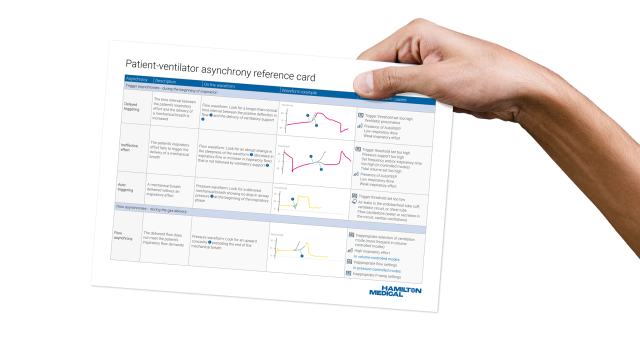
Übersichtskarte zu Asynchronien

Gängigen Asynchronien auf der Spur. Kostenlose Übersichtskarte

Unsere Übersichtskarte zu Asynchronien gibt Ihnen einen Überblick über die gängigsten Asynchronietypen, ihre Ursachen und wie Sie sie erkennen.
Fußnoten

  • A. IntelliSync+ ist als Option auf den Beatmungsgeräten HAMILTON-C6 und HAMILTON-G5 verfügbar und gehört beim HAMILTON-S1 zur Standardausstattung.

Referenzen

  1. 1. Chao DC, Scheinhorn DJ, Stearn-Hassenpflug M. Patient-ventilator trigger asynchrony in prolonged mechanical ventilation. Chest. 1997;112(6):1592-1599. doi:10.1378/chest.112.6.1592
  2. 2. Thille AW, Rodriguez P, Cabello B, Lellouche F, Brochard L. Patient-ventilator asynchrony during assisted mechanical ventilation. Intensive Care Med. 2006;32(10):1515-1522. doi:10.1007/s00134-006-0301-8
  3. 3. de Wit M, Miller KB, Green DA, Ostman HE, Gennings C, Epstein SK. Ineffective triggering predicts increased duration of mechanical ventilation. Crit Care Med. 2009;37(10):2740-2745. doi:10.1097/ccm.0b013e3181a98a05
  4. 4. Blanch L, Villagra A, Sales B, et al. Asynchronies during mechanical ventilation are associated with mortality. Intensive Care Med. 2015;41(4):633-641. doi:10.1007/s00134-015-3692-6
  5. 5. Fabry B, Guttmann J, Eberhard L, Bauer T, Haberthür C, Wolff G. An analysis of desynchronization between the spontaneously breathing patient and ventilator during inspiratory pressure support. Chest. 1995;107(5):1387-1394. doi:10.1378/chest.107.5.1387
  6. 6. Giannouli E, Webster K, Roberts D, Younes M. Response of ventilator-dependent patients to different levels of pressure support and proportional assist. Am J Respir Crit Care Med. 1999;159(6):1716-1725. doi:10.1164/ajrccm.159.6.9704025
  7. 7. Colombo D, Cammarota G, Alemani M, et al. Efficacy of ventilator waveforms observation in detecting patient-ventilator asynchrony. Crit Care Med. 2011;39(11):2452-2457. doi:10.1097/CCM.0b013e318225753c
  8. 8. Mojoli F, Pozzi M, Orlando A, et al. Timing of inspiratory muscle activity detected from airway pressure and flow during pressure support ventilation: the waveform method. Crit Care. 2022;26(1):32. Published 2022 Jan 30. doi:10.1186/s13054-022-03895-4
  9. 9. Ramirez II, Arellano DH, Adasme RS, et al. Ability of ICU Health-Care Professionals to Identify Patient-Ventilator Asynchrony Using Waveform Analysis. Respir Care. 2017;62(2):144-149. doi:10.4187/respcare.04750

Patient-ventilator trigger asynchrony in prolonged mechanical ventilation.

Chao DC, Scheinhorn DJ, Stearn-Hassenpflug M. Patient-ventilator trigger asynchrony in prolonged mechanical ventilation. Chest. 1997;112(6):1592-1599. doi:10.1378/chest.112.6.1592

STUDY OBJECTIVE To investigate patient-ventilator trigger asynchrony (TA), its prevalence, physiologic basis, and clinical implications in patients requiring prolonged mechanical ventilation (PMV). STUDY DESIGN Descriptive and prospective cohort study. SETTING Barlow Respiratory Hospital (BRH), a regional weaning center. PATIENTS Two hundred consecutive ventilator-dependent patients, transferred to BRH over an 18-month period for attempted weaning from PMV. METHODS AND INTERVENTIONS Patients were assessed clinically for TA within the first week of hospital admission, or once they were in hemodynamically stable condition, by observation of uncoupling of accessory respiratory muscle efforts and onset of machine breaths. Patients were excluded if they had weaned by the time of assessment or if they never achieved hemodynamic stability. Ventilator mode was patient triggered, flow control, volume cycled, with a tidal volume of 7 to 10 mL/kg. Esophageal pressure (Peso), airway-opening pressure, and airflow were measured in patients with TA who consented to esophageal catheter insertion. Attempts to decrease TA in each patient included application of positive end-expiratory pressure (PEEP) stepwise to 10 cm H2O, flow triggering, and reduction of ventilator support in pressure support (PS) mode. Patients were followed up until hospital discharge, when outcomes were scored as weaned (defined as >7 days of ventilator independence), failed to wean, or died. RESULTS Of the 200 patients screened, 26 were excluded and 19 were found to have TA. Patients with TA were older, carried the diagnosis of COPD more frequently, and had more severe hypercapnia than their counterparts without TA. Only 3 of 19 patients (16%), all with intermittent TA, weaned from mechanical ventilation, after 70, 72, and 108 days, respectively. This is in contrast to a weaning success rate of 57%, with a median (range) time to wean of 33 (3 to 182) days in patients without TA. Observation of uncoupling of accessory respiratory muscle movement and onset of machine breaths was accurate in identifying patients with TA, which was confirmed in all seven patients consenting to Peso monitoring. TA appeared to result from high auto-PEEP and severe pump failure. Adjusting trigger sensitivity and application of flow triggering were unsuccessful in eliminating TA; external PEEP improved but rarely led to elimination of TA that was transient in duration. Reduction of ventilator support in PS mode, with resultant increased respiratory pump output and lower tidal volumes, uniformly succeeded in eliminating TA. However, this approach imposed a fatiguing load on the respiratory muscles and was poorly tolerated. CONCLUSION TA can be easily identified clinically, and when it occurs in the patient in stable condition with PMV, is associated with poor outcome.

Patient-ventilator asynchrony during assisted mechanical ventilation.

Thille AW, Rodriguez P, Cabello B, Lellouche F, Brochard L. Patient-ventilator asynchrony during assisted mechanical ventilation. Intensive Care Med. 2006;32(10):1515-1522. doi:10.1007/s00134-006-0301-8

OBJECTIVE The incidence, pathophysiology, and consequences of patient-ventilator asynchrony are poorly known. We assessed the incidence of patient-ventilator asynchrony during assisted mechanical ventilation and we identified associated factors. METHODS Sixty-two consecutive patients requiring mechanical ventilation for more than 24 h were included prospectively as soon as they triggered all ventilator breaths: assist-control ventilation (ACV) in 11 and pressure-support ventilation (PSV) in 51. MEASUREMENTS Gross asynchrony detected visually on 30-min recordings of flow and airway pressure was quantified using an asynchrony index. RESULTS Fifteen patients (24%) had an asynchrony index greater than 10% of respiratory efforts. Ineffective triggering and double-triggering were the two main asynchrony patterns. Asynchrony existed during both ACV and PSV, with a median number of episodes per patient of 72 (range 13-215) vs. 16 (4-47) in 30 min, respectively (p=0.04). Double-triggering was more common during ACV than during PSV, but no difference was found for ineffective triggering. Ineffective triggering was associated with a less sensitive inspiratory trigger, higher level of pressure support (15 cmH(2)O, IQR 12-16, vs. 17.5, IQR 16-20), higher tidal volume, and higher pH. A high incidence of asynchrony was also associated with a longer duration of mechanical ventilation (7.5 days, IQR 3-20, vs. 25.5, IQR 9.5-42.5). CONCLUSIONS One-fourth of patients exhibit a high incidence of asynchrony during assisted ventilation. Such a high incidence is associated with a prolonged duration of mechanical ventilation. Patients with frequent ineffective triggering may receive excessive levels of ventilatory support.

Ineffective triggering predicts increased duration of mechanical ventilation.

de Wit M, Miller KB, Green DA, Ostman HE, Gennings C, Epstein SK. Ineffective triggering predicts increased duration of mechanical ventilation. Crit Care Med. 2009;37(10):2740-2745. doi:10.1097/ccm.0b013e3181a98a05

OBJECTIVES To determine whether high rates of ineffective triggering within the first 24 hrs of mechanical ventilation (MV) are associated with longer MV duration and shorter ventilator-free survival (VFS). DESIGN Prospective cohort study. SETTING Medical intensive care unit (ICU) at an academic medical center. PATIENTS Sixty patients requiring invasive MV. INTERVENTIONS None. MEASUREMENTS Patients had pressure-time and flow-time waveforms recorded for 10 mins within the first 24 hrs of MV initiation. Ineffective triggering index (ITI) was calculated by dividing the number of ineffectively triggered breaths by the total number of breaths (triggered and ineffectively triggered). A priori, patients were classified into ITI >or=10% or ITI <10%. Patient demographics, MV reason, codiagnosis of chronic obstructive pulmonary disease (COPD), sedation levels, and ventilator parameters were recorded. MEASUREMENTS AND MAIN RESULTS Sixteen of 60 patients had ITI >or=10%. The two groups had similar characteristics, including COPD frequency and ventilation parameters, except that patients with ITI >or=10% were more likely to have pressured triggered breaths (56% vs. 16%, p = .003) and had a higher intrinsic respiratory rate (22 breaths/min vs. 18, p = .03), but the set ventilator rate was the same in both groups (9 breaths/min vs. 9, p = .78). Multivariable analyses adjusting for pressure triggering also demonstrated that ITI >or=10% was an independent predictor of longer MV duration (10 days vs. 4, p = .0004) and shorter VFS (14 days vs. 21, p = .03). Patients with ITI >or=10% had a longer ICU length of stay (8 days vs. 4, p = .01) and hospital length of stay (21 days vs. 8, p = .03). Mortality was the same in the two groups, but patients with ITI >or=10% were less likely to be discharged home (44% vs. 73%, p = .04). CONCLUSIONS Ineffective triggering is a common problem early in the course of MV and is associated with increased morbidity, including longer MV duration, shorter VFS, longer length of stay, and lower likelihood of home discharge.

Asynchronies during mechanical ventilation are associated with mortality.

Blanch L, Villagra A, Sales B, et al. Asynchronies during mechanical ventilation are associated with mortality. Intensive Care Med. 2015;41(4):633-641. doi:10.1007/s00134-015-3692-6

PURPOSE This study aimed to assess the prevalence and time course of asynchronies during mechanical ventilation (MV). METHODS Prospective, noninterventional observational study of 50 patients admitted to intensive care unit (ICU) beds equipped with Better Care™ software throughout MV. The software distinguished ventilatory modes and detected ineffective inspiratory efforts during expiration (IEE), double-triggering, aborted inspirations, and short and prolonged cycling to compute the asynchrony index (AI) for each hour. We analyzed 7,027 h of MV comprising 8,731,981 breaths. RESULTS Asynchronies were detected in all patients and in all ventilator modes. The median AI was 3.41 % [IQR 1.95-5.77]; the most common asynchrony overall and in each mode was IEE [2.38 % (IQR 1.36-3.61)]. Asynchronies were less frequent from 12 pm to 6 am [1.69 % (IQR 0.47-4.78)]. In the hours where more than 90 % of breaths were machine-triggered, the median AI decreased, but asynchronies were still present. When we compared patients with AI > 10 vs AI ≤ 10 %, we found similar reintubation and tracheostomy rates but higher ICU and hospital mortality and a trend toward longer duration of MV in patients with an AI above the cutoff. CONCLUSIONS Asynchronies are common throughout MV, occurring in all MV modes, and more frequently during the daytime. Further studies should determine whether asynchronies are a marker for or a cause of mortality.

An analysis of desynchronization between the spontaneously breathing patient and ventilator during inspiratory pressure support.

Fabry B, Guttmann J, Eberhard L, Bauer T, Haberthür C, Wolff G. An analysis of desynchronization between the spontaneously breathing patient and ventilator during inspiratory pressure support. Chest. 1995;107(5):1387-1394. doi:10.1378/chest.107.5.1387

It is common practice to convert patients with acute respiratory insufficiency (ARI) from controlled mechanical ventilation to some form of assisted spontaneous breathing as early as possible. A widely used mode of assisted spontaneous breathing is patient-triggered inspiratory pressure support (IPS). We investigated 11 patients with ARI during weaning from mechanical ventilation using IPS and found that in 9 of these patients, desynchronization between patient and ventilator occurred, ie, that the ventilator did not detect and support all the patients' breathing efforts. Five of these 9 patients displayed severe desynchronization lasting at least 5 min and with less than half of all breathing efforts being supported by the ventilator. We present the analysis of gas flow, volume, esophageal pressure, airway pressure, and tracheal pressure of 1 patient with ARI displaying desynchronization under IPS. Our results imply that desynchronization can occur due to the following: (1) inspiratory response delays caused by the inspiratory triggering mechanisms and the demand flow characteristics of the ventilator; (2) a mismatch between the patient's completion of the inspiration effort and the ventilator's criterion for terminating pressure support; and (3) restriction of expiration due to resistance from patient's airways, endotracheal tube, and expiratory valve. From our analysis, we have made proposals for reducing desynchronization in clinical practice.

Response of ventilator-dependent patients to different levels of pressure support and proportional assist.

Giannouli E, Webster K, Roberts D, Younes M. Response of ventilator-dependent patients to different levels of pressure support and proportional assist. Am J Respir Crit Care Med. 1999;159(6):1716-1725. doi:10.1164/ajrccm.159.6.9704025

The ventilator's response to the patient's effort is quite different in proportional assist ventilation (PAV) and pressure support ventilation (PSV). We wished to determine whether this results in different ventilatory and breathing pattern responses to alterations in level of support and, if so, whether there are any gas exchange consequences. Fourteen patients were studied. Average elastance (E) was 22.8 (range, 14 -36) cm H2O/L and average resistance (R) was 15. 7 (range, 9-21) cm H2O/L/s. The highest PSV support (PSVmax) was that associated with a tidal volume (VT) of 10 ml/kg (20.4 +/- 3.2 cm H2O), and the highest level of PAV assist (PAVmax) was 78 +/- 7% of E and 76 +/- 7% of R. Level of assist was decreased in steps to the lowest tolerable level (PSVmin, PAVmin). Minute ventilation, VT, ventilator rate (RRvent), and arterial gas tensions were measured at each level. We also determined the patient's respiratory rate (RRpat) by adding the number of ineffective efforts (DeltaRR) to RRvent. There was no difference between PSVmin and PAVmin in any of the variables. At PSVmax, VT was significantly higher (0.90 +/- 0.30 versus 0.51 +/- 0.16 L) and RRvent was significantly lower (13.2 +/- 3.9 versus 27.6 +/- 10.5 min-1) than at PAVmax. The difference in RRvent was largely related to a progressive increase in ineffective efforts on PSV as level increased (DeltaRR 12.1 +/- 10.1 vs 1.4 +/- 2.1 with PAVmax); there was no significant difference in RRpat. The differences in breathing pattern had no consequence on arterial blood gas tensions. We conclude that substantial differences in breathing pattern may occur between PSV and PAV and that these are largely artifactual and related to different patient-ventilator interactions.

Efficacy of ventilator waveforms observation in detecting patient-ventilator asynchrony.

Colombo D, Cammarota G, Alemani M, et al. Efficacy of ventilator waveforms observation in detecting patient-ventilator asynchrony. Crit Care Med. 2011;39(11):2452-2457. doi:10.1097/CCM.0b013e318225753c

OBJECTIVES The value of visual inspection of ventilator waveforms in detecting patient-ventilator asynchronies in the intensive care unit has never been systematically evaluated. This study aims to assess intensive care unit physicians' ability to identify patient-ventilator asynchronies through ventilator waveforms. DESIGN Prospective observational study. SETTING Intensive care unit of a University Hospital. PATIENTS Twenty-four patients receiving mechanical ventilation for acute respiratory failure. INTERVENTION Forty-three 5-min reports displaying flow-time and airway pressure-time tracings were evaluated by 10 expert and 10 nonexpert, i.e., residents, intensive care unit physicians. The asynchronies identified by experts and nonexperts were compared with those ascertained by three independent examiners who evaluated the same reports displaying, additionally, tracings of diaphragm electrical activity. MEASUREMENTS AND MAIN RESULTS Data were examined according to both breath-by-breath analysis and overall report analysis. Sensitivity, specificity, and positive and negative predictive values were determined. Sensitivity and positive predictive value were very low with breath-by-breath analysis (22% and 32%, respectively) and fairly increased with report analysis (55% and 44%, respectively). Conversely, specificity and negative predictive value were high with breath-by-breath analysis (91% and 86%, respectively) and slightly lower with report analysis (76% and 82%, respectively). Sensitivity was significantly higher for experts than for nonexperts for breath-by-breath analysis (28% vs. 16%, p < .05), but not for report analysis (63% vs. 46%, p = .15). The prevalence of asynchronies increased at higher ventilator assistance and tidal volumes (p < .001 for both), whereas it decreased at higher respiratory rates and diaphragm electrical activity (p < .001 for both). At higher prevalence, sensitivity decreased significantly (p < .001). CONCLUSIONS The ability of intensive care unit physicians to recognize patient-ventilator asynchronies was overall quite low and decreased at higher prevalence; expertise significantly increased sensitivity for breath-by-breath analysis, whereas it only produced a trend toward improvement for report analysis.

Timing of inspiratory muscle activity detected from airway pressure and flow during pressure support ventilation: the waveform method.

Mojoli F, Pozzi M, Orlando A, et al. Timing of inspiratory muscle activity detected from airway pressure and flow during pressure support ventilation: the waveform method. Crit Care. 2022;26(1):32. Published 2022 Jan 30. doi:10.1186/s13054-022-03895-4

BACKGROUND Whether respiratory efforts and their timing can be reliably detected during pressure support ventilation using standard ventilator waveforms is unclear. This would give the opportunity to assess and improve patient-ventilator interaction without the need of special equipment. METHODS In 16 patients under invasive pressure support ventilation, flow and pressure waveforms were obtained from proximal sensors and analyzed by three trained physicians and one resident to assess patient's spontaneous activity. A systematic method (the waveform method) based on explicit rules was adopted. Esophageal pressure tracings were analyzed independently and used as reference. Breaths were classified as assisted or auto-triggered, double-triggered or ineffective. For assisted breaths, trigger delay, early and late cycling (minor asynchronies) were diagnosed. The percentage of breaths with major asynchronies (asynchrony index) and total asynchrony time were computed. RESULTS Out of 4426 analyzed breaths, 94.1% (70.4-99.4) were assisted, 0.0% (0.0-0.2) auto-triggered and 5.8% (0.4-29.6) ineffective. Asynchrony index was 5.9% (0.6-29.6). Total asynchrony time represented 22.4% (16.3-30.1) of recording time and was mainly due to minor asynchronies. Applying the waveform method resulted in an inter-operator agreement of 0.99 (0.98-0.99); 99.5% of efforts were detected on waveforms and agreement with the reference in detecting major asynchronies was 0.99 (0.98-0.99). Timing of respiratory efforts was accurately detected on waveforms: AUC for trigger delay, cycling delay and early cycling was 0.865 (0.853-0.876), 0.903 (0.892-0.914) and 0.983 (0.970-0.991), respectively. CONCLUSIONS Ventilator waveforms can be used alone to reliably assess patient's spontaneous activity and patient-ventilator interaction provided that a systematic method is adopted.

Ability of ICU Health-Care Professionals to Identify Patient-Ventilator Asynchrony Using Waveform Analysis.

Ramirez II, Arellano DH, Adasme RS, et al. Ability of ICU Health-Care Professionals to Identify Patient-Ventilator Asynchrony Using Waveform Analysis. Respir Care. 2017;62(2):144-149. doi:10.4187/respcare.04750

BACKGROUND Waveform analysis by visual inspection can be a reliable, noninvasive, and useful tool for detecting patient-ventilator asynchrony. However, it is a skill that requires a properly trained professional. METHODS This observational study was conducted in 17 urban ICUs. Health-care professionals (HCPs) working in these ICUs were asked to recognize different types of asynchrony shown in 3 evaluation videos. The health-care professionals were categorized according to years of experience, prior training in mechanical ventilation, profession, and number of asynchronies identified correctly. RESULTS A total of 366 HCPs were evaluated. Statistically significant differences were found when HCPs with and without prior training in mechanical ventilation (trained vs non-trained HCPs) were compared according to the number of asynchronies detected correctly (of the HCPs who identified 3 asynchronies, 63 [81%] trained vs 15 [19%] non-trained, P < .001; 2 asynchronies, 72 [65%] trained vs 39 [35%] non-trained, P = .034; 1 asynchrony, 55 [47%] trained vs 61 [53%] non-trained, P = .02; 0 asynchronies, 17 [28%] trained vs 44 [72%] non-trained, P < .001). HCPs who had prior training in mechanical ventilation also increased, nearly 4-fold, their odds of identifying ≥2 asynchronies correctly (odds ratio 3.67, 95% CI 1.93-6.96, P < .001). However, neither years of experience nor profession were associated with the ability of HCPs to identify asynchrony. CONCLUSIONS HCPs who have specific training in mechanical ventilation increase their ability to identify asynchrony using waveform analysis. Neither experience nor profession proved to be a relevant factor to identify asynchrony correctly using waveform analysis.

Related articles. Get a deeper look